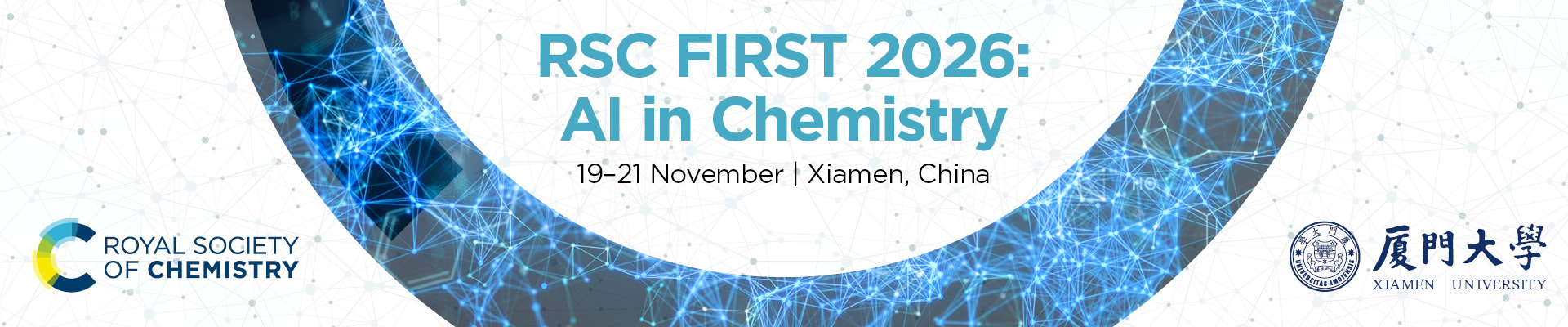
Prof Konstantin Novoselov
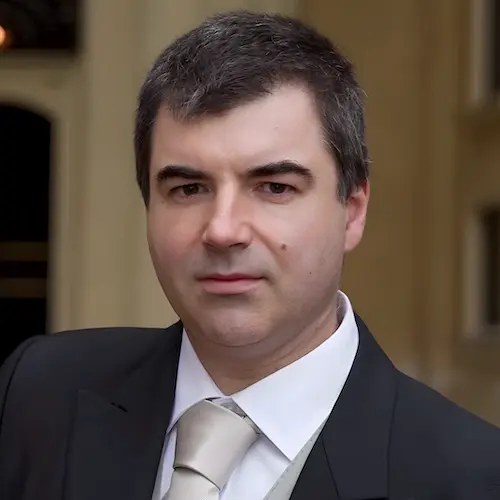
In Conversation with Prof Konstantin Novoselov
Prof Konstantin Novoselov discusses why 2026 marks a revival of purpose-built AI tools for science, the transformational potential of autonomous laboratories, practical guidance for early and mid-career researchers, and why keeping pace requires active participation at RSC FIRST 2026 in Xiamen.
AI began penetrating science a few years ago, when the success of ChatGPT became obvious. Many people started applying AI across various fields, including chemistry and materials science. However, the tools available at that time were not designed specifically for science; we were simply adopting generic large language models. It turned out that such tools achieved only limited success in scientific contexts.
Since then, researchers have recognised this limitation and developed new, purpose-built tools for science — an effort that required considerable time and investment. Now those efforts are beginning to pay off, and we are witnessing a genuine revival in the application of AI to science and chemistry. In particular, we are seeing tremendous progress emerge precisely this year (2026).
I am confident that significant progress will be made in this area. We are already seeing new catalysts, new polymer materials, and new battery materials emerge thanks to AI development.
With that being said, I believe the biggest breakthroughs are still ahead — and they will be associated with autonomous laboratories, where the full cycle of scientific research and discovery is controlled by AI. This will dramatically accelerate the translation of new materials and new chemicals from the laboratory into practical applications.
I truly believe that we need to use AI where it is genuinely necessary. Currently, we see quite a few papers using AI in ways that are not particularly beneficial.
AI is a very useful and powerful tool, but we must use it where it is truly required; specifically, only when other means have failed and when AI's ability to structure information and uncover deeper correlations becomes essential.
Personally, I think that AI will help good researchers, but if you are lacking ideas without AI –– AI will not help. To this end, it is important to focus on your core research.
The power of AI will then assist you. You need to remember that AI is a tool. If you utilise it as a powerful tool, then it is going to work. Your primary scientific focus and expertise remain essential.
I think there is a possibility, but I also believe that we need to design our AI systems specifically tuned for scientific discovery. The naive approach that we have adopted thus far — simply scaling up generic models — is not going to work in my view.
The application of AI to science is developing extremely fast — so fast that we need to monitor this progress on a monthly, or at the very least a yearly, basis. I am certain that all the latest advances in this area will be presented at the conference, so I would strongly encourage people to join us.


{{ 'en' == 'cn' ? item.name : item.name_en }}
{{ 'en' == 'cn' ? item.desc : item.desc_en }}