Professor Yi Luo
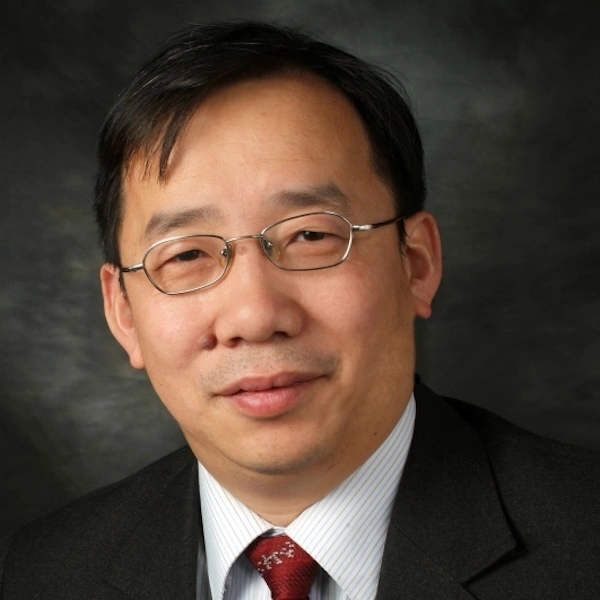
In Conversation with Professor Yi Luo
Director, Hefei National Laboratory for Physical Sciences at the Microscale, China
Prof Yi Luo reflects on overcoming fragmentation in AI chemistry, building trustworthy and interoperable platforms, the evolution of autonomous AI chemists, and his invitation to gather in Xiamen for RSC FIRST 2026.
Because the question has changed.
For the past decade, we asked: Can AI do chemistry? Now we know the answer is yes—not in theory, but in real labs with real experiments and real discoveries. The new question is harder: How do we make all these AI chemists work together?
Today, every major lab is building its own platform, speaking its own data format, using its own benchmarks. My platform and yours cannot exchange knowledge. A catalyst discovered in one lab cannot be reproduced in another—not because the science is wrong, but because the standards don't exist. We are building remarkable capabilities, but we are building them in isolation.
2026 is the year this becomes urgent—not because the technology is new, but because the fragmentation is real.
Funding is flowing globally. Platforms are maturing. Industry is waiting for something they can trust and adopt. But without shared protocols for data, reproducibility, and integration from lab to plant, we risk delivering a thousand bespoke solutions instead of a discipline.
RSC FIRST 2026 in Xiamen is where we address this—not through abstract declarations, but through concrete case studies and working groups. It is the first global gathering focused not on celebrating what we have built, but on aligning how we will build together going forward.
That is the work that cannot be done in a single lab. That is why 2026 matters. And that is why I hope you will join us in Xiamen.
The commercial opportunity is not in any single algorithm—it is in integration. Making different steps, different tools, and different platforms work together seamlessly.
Today, we already have tools that can predict molecular properties, design synthetic routes, and optimize reaction conditions. But when chemical companies look at these results, the three questions they always ask are: Will this prediction hold under real operating conditions? How big is the gap from grams to tons? How can I validate it with my own data?
The integrated solution that can answer these three questions is the most immediate commercial opportunity right now. Three directions are already being paid for by industry:
Route planning directly linked to industrial process scaleup from laboratory grams to plant-level tons.
Autonomous decision support systems operating seamlessly at the chemical plant level.
Fully autonomous, self-driving laboratories packaged as a directly deployable industrial product.
The common bottleneck across all three is not algorithmic accuracy—it is standardization: data formats, experimental protocols, model validation procedures. Without these, industry will not adopt at scale. With them, commercialization will accelerate rapidly.
Building smarter AI chemists is only half the story. The other—and harder—half is making them trustworthy and interoperable across labs and factories. That trust cannot be built by a single paper, nor by a single platform—it requires all of us to sit down together and define the standards.
That is why RSC FIRST 2026 is not just an academic conference; it is the "infrastructure" site where commercial opportunities truly take off.
The AI chemist will evolve from a custom-built system into a standard industrial platform—one that any chemical company can deploy, operate, and trust without a team of AI specialists on site.
Today, AI chemist platforms are built by pioneers. They work, they discover, and in our case, they already deliver products to industry. But each deployment is still a project—custom integration, specialized expertise, bespoke workflows.
In 3–5 years, the breakthrough is standardization: the platform becomes a product, not a prototype. An industrial R&D team specifies the problem—new feedstock, better selectivity, longer catalyst lifetime—and the platform runs the discovery campaign autonomously, delivering a validated solution ready for pilot testing.
Catalysis will lead the way, but the capability will extend to polymers, formulations, and fine chemicals. The real shift is not technological—it is organizational. The AI chemist moves from being the project to being the tool that every project uses. Routine. Reproducible. Trusted.
That is the milestone: when every chemical company has one of these platforms running in its R&D center.
Honestly? I do not wish I had learned any AI tool. There was no AI to learn back then anyway.
My PhD was in computational physics, in an era when deep learning did not exist and machine learning was not yet practical for chemistry—the data were too small, the compute too limited. I do not regret missing something that was not there.
What I did learn, however, turned out to be exactly what I needed. Computational physics trained me to think in terms of mathematical representations, numerical methods, and how to translate physical problems into computable forms. When AI finally arrived, those skills were not obsolete—they were the foundation.
Because I understood the mathematics behind machine learning, I could see what the new methods were actually doing, not just how to call a library. And because I had spent years wrestling with sparse, noisy, imperfect data, I knew that the real challenge was not the algorithm—it was turning chemistry into a well-posed data problem. That was the insight that led to the first AI chemist with real scientific intelligence.
So, if I could go back, I would tell my younger self: do not chase tools that do not yet exist. Build the foundations—mathematics, physics, programming, and the instinct for what makes a problem solvable. When the tools finally arrive, you will recognize them for what they are, and you will be ready.
That is what happened. And that is why we built what we built.
Here is a perspective that might help: AI has not changed how you work. It has only changed what you delegate.
Think about your daily routine. You think, you ask your students and postdocs to execute, then you think again. The execution—synthesis, measurements, calculations—has never been your primary job. That is what the group is for. AI is just another pair of hands. Faster, yes. But still a pair of hands.
So, your role has not changed. You still define the problem. You still decide what is worth pursuing. You still interpret the results and ask the next question. The only difference is that now, when you tell someone to "run these experiments," that someone might be an AI tool or an autonomous platform. But the structure of your work—think, delegate, think again—remains exactly what it has always been.
A practical way to reframe your role:
Your chemical knowledge is not just useful—it is essential. The search space of possible molecules is astronomically large. No amount of data or compute will ever explore it exhaustively. The only way AI can navigate that space is with constraints—rules about what is chemically sensible, what is physically possible, what is worth trying. Those rules do not come from data. They come from you. Your intuition reduces the search space from infinite to something tractable. Without that, the AI is generating noise, not chemistry.
The anxiety about being "left behind" comes from a misunderstanding: that you need to become the one doing the execution. You do not. You need to understand what the tools can do, so you can delegate to them intelligently. That is not a technical skill—it is a management skill. And it is one you already have. AI just gives you more time to do it.
RSC FIRST 2026 in Xiamen is the first global gathering dedicated to AI chemistry—and it takes place in China, where some of the most advanced autonomous labs are already running.
It is not only the place—it is the people. AI is powerful, but it needs direction. Direction requires consensus—and consensus is built face-to-face, across labs and borders. Xiamen is where we form the alliances that will decide how AI serves chemistry, not the other way around.
Not a celebration—a direction. Welcome to Xiamen.


{{ 'en' == 'cn' ? item.name : item.name_en }}
{{ 'en' == 'cn' ? item.desc : item.desc_en }}