Dr Helen Pain
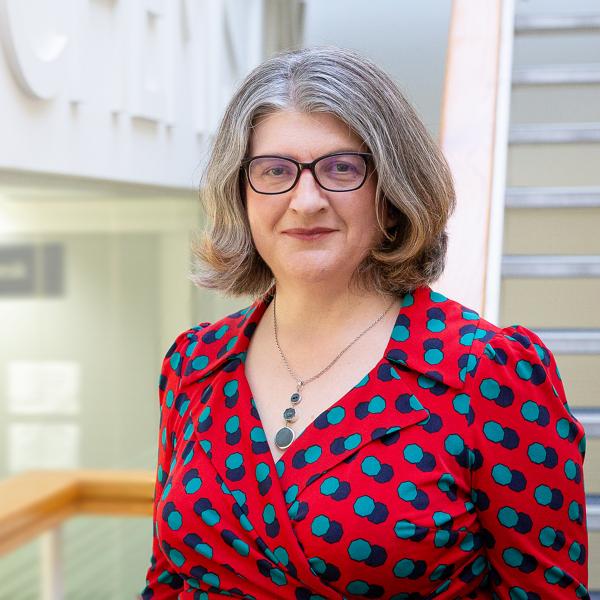
In Conversation with Dr Helen Pain
Dr Helen Pain shares her strategic insights on the pivotal milestone of 2026 for AI in chemistry, high-impact commercial opportunities, self-driving laboratories, empowering mid-career scientists, and her invitation to join the global community at RSC FIRST 2026 in Xiamen.
AI in chemistry has moved beyond a specialist field and is now influencing almost every stage of the scientific process, from literature discovery and experiment planning to materials design and autonomous laboratories. At the same time, the technology is advancing faster than the community can fully absorb it.
2026 is therefore a pivotal moment. We have enough real-world examples to demonstrate impact, but we are still early enough to shape how AI develops in a way that is scientifically rigorous, ethical and globally beneficial.
The most immediate opportunities are in areas where AI can significantly reduce the cost, time and risk of innovation. Three stand out:
AI can rapidly screen and prioritise candidate molecules before they are synthesised and tested experimentally, accelerating the path to new medicines.
AI is helping researchers design materials with specific properties, supporting applications ranging from batteries to catalysts and advanced manufacturing.
AI has immediate value in improving yields, reducing waste, lowering energy use and enhancing safety in chemical manufacturing.
If I had to choose one area where commercial value is already becoming visible at scale, it would be the combination of chemistry expertise with AI-driven design and optimisation throughout R&D and manufacturing.
The breakthrough I would watch most closely is the integration of AI, automation and robotics into ‘self-driving labs’.
The individual technologies already exist. What is becoming possible is a closed-loop system where AI designs experiments, automation performs them, instruments analyse the results and the system learns continuously from new data.
Over the next three to five years, I expect this approach to become increasingly practical in industrial settings such as materials discovery, catalyst development and formulation science, where accelerating experimentation has direct commercial value.
Rather than a specific tool, I would have wanted to learn how to use AI for navigating scientific knowledge.
Learning how to use AI-enabled literature tools to identify relevant sources and synthesise information, while still applying scientific judgement, would have helped me spend less time searching for information and more time developing my understanding.
My first message would be: don’t panic.
Chemistry expertise remains essential. In fact, the more powerful AI becomes, the more valuable domain knowledge and critical thinking become. Everything I read repeatedly emphasises the importance of human oversight, scientific judgement and interdisciplinary collaboration.
A practical approach is:
You do not need to become a computer scientist. What matters is becoming an informed scientist who knows when and how to use AI effectively.
AI is transforming chemistry at an unprecedented pace, and no single organisation, country or discipline can shape that future alone.
RSC FIRST 2026 in Xiamen offers a rare opportunity to bring together researchers, innovators, educators and industry leaders from around the world to explore how AI can accelerate discovery while maintaining the standards, integrity and creativity that science depends upon.
My invitation is simple: come not only to learn what is happening today, but to help define what happens next. The most important outcomes will be the collaborations, ideas and partnerships that emerge when a global community comes together around a shared vision for the future of chemistry.


{{ 'en' == 'cn' ? item.name : item.name_en }}
{{ 'en' == 'cn' ? item.desc : item.desc_en }}